Portfolio-level planning
The lender can establish priorities and shared instructions before field work.
Business-use collateral
Kansas City commercial fleet recovery for lenders, lessors, rental organizations, and servicers needing coordinated portfolio review and unit-level documentation.
Designed for: Commercial banks, fleet finance companies, rental organizations, lessors, credit unions, servicers, and secured lenders.
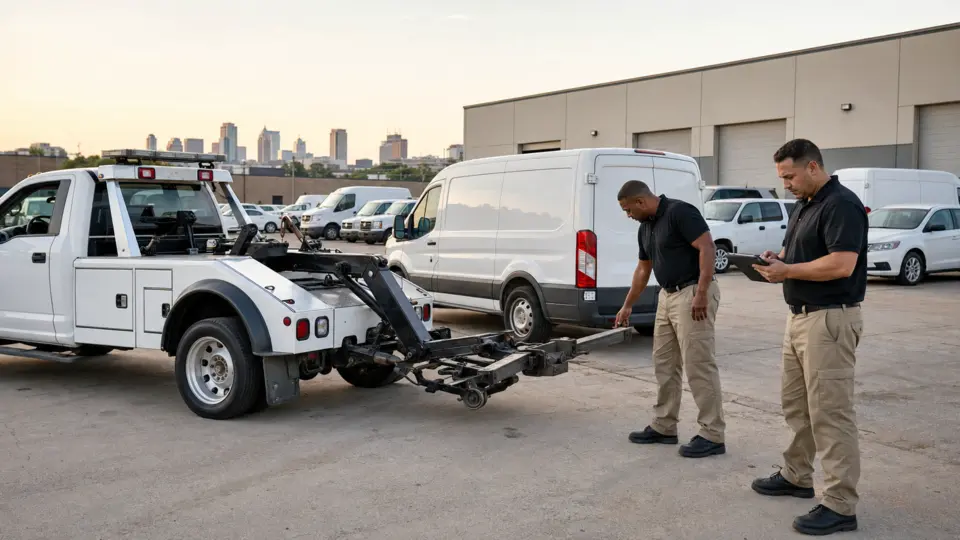
The lender’s problem
Business-use, rental, and leased vehicles may be spread across yards, employee locations, customer sites, or multiple jurisdictions. Ownership or security interest, contract authority, unit status, custodians, contents, priorities, and post-recovery instructions may differ across the portfolio.
LRS can review the portfolio as a coordinated project, identify conventional vehicles that fit current capability, establish unit-level reporting, and separate specialty collateral for another review path.
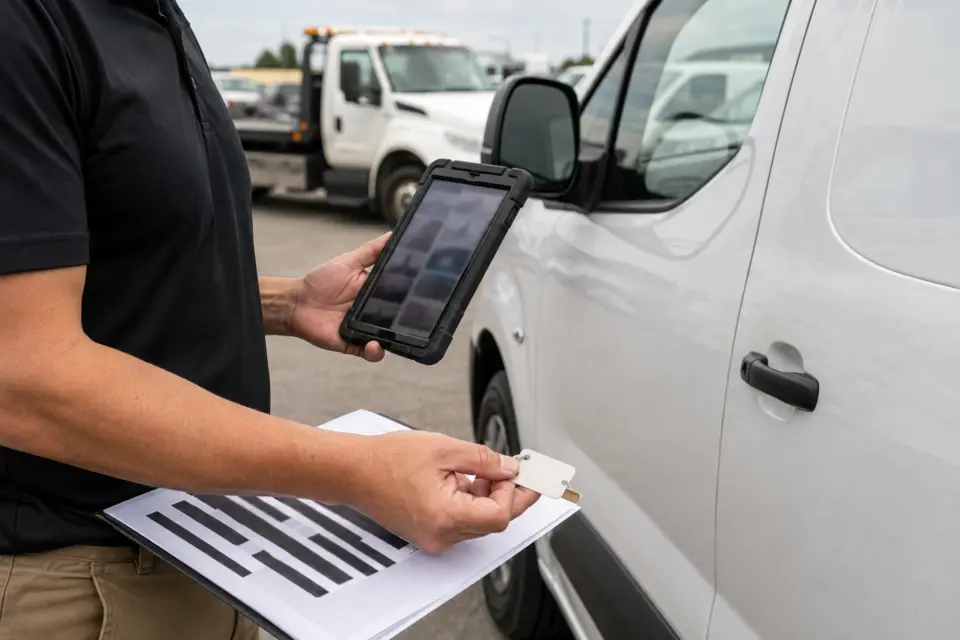
Unit-level accountability
Commercial fleet recovery can involve cargo vans, light-duty pickups, passenger vehicles, service units, leased vehicles, and overdue rental collateral. Each accepted unit should retain a distinct assignment identity, photographs, key status, visible-condition notes, contents handling, storage location, and authorized destination.
That unit-by-unit record helps lenders, lessors, servicers, and rental organizations reconcile a larger portfolio without treating every vehicle as though it has the same location, condition, priority, or post-recovery instruction.
What the service includes
Service boundary: Every unit requires appropriate authority and its own accepted assignment record. Portfolio size, locations, timing, transport, storage, and specialty-equipment needs must be confirmed. No simultaneous recovery, fixed completion time, or acceptance of every unit is promised.
Why the approach matters
The lender can establish priorities and shared instructions before field work.
Each accepted vehicle can retain a distinct status and documentation trail.
Standard vehicles and specialty units can be separated into appropriate workflows.
How it works
Discuss general unit count, classes, locations, and urgency without using the public form for sensitive data.
LRS identifies service-area fit, standard recoveries, and assets requiring special review.
The lender approves sequencing, contact expectations, and post-recovery instructions.
Accepted units are worked, documented, reported, stored or transported, and reconciled individually under the approved plan.
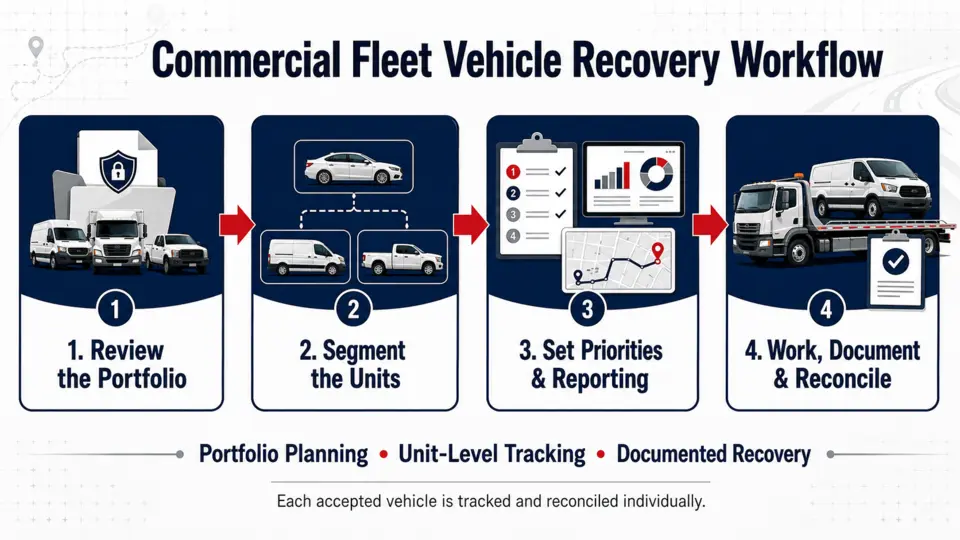
Portfolio-to-unit workflow
The workflow begins with authority and a secure master unit list. Conventional fleet vehicles are separated from specialty assets, priorities and reporting expectations are established, and each accepted recovery is documented and reconciled under its own handling instructions.
Appropriate use cases
Pickups, vans, and work vehicles associated with a commercial borrower.
Units assigned to employees or located at multiple operating sites.
A portfolio containing standard vehicles plus trailers or equipment requiring separate review.
Collateral and assignment vocabulary
These categories help lenders describe an assignment accurately. Inclusion does not guarantee acceptance; capability, condition, lawful access, equipment, coverage, transport, storage, and destination must still be reviewed.
Assignment preparation
Protect sensitive data: Use the public form only to establish contact. VINs, account numbers, debtor details, exact locations, court documents, plate information, and access instructions belong in the approved secure assignment channel.
Service distinctions
Service-specific answers
Potentially. Unit count, locations, collateral classes, capacity, and reporting needs must be reviewed first.
No simultaneous completion is promised. Timing depends on location, availability, access, equipment, and the agreed priority plan.
Each accepted unit should retain its own assignment identity, status, condition record, and handling instructions.
Contents and personal-property procedures must follow the lender’s approved instructions and applicable requirements.
They can be submitted for review. Trucks, trailers, equipment, and unusually configured vehicles receive an item-specific capability, transport, storage, and destination decision.
Potentially, but no transport scope is assumed. Equipment, route, authorization, permits when applicable, receiving instructions, and any third-party involvement must be expressly reviewed and accepted.
Continue evaluating
Published lender guidance
Regional service-area paths
These city pages add county, corridor, access, local-evidence, and assignment-fit context. They do not guarantee acceptance, timing, or a recovery result. Use the full coverage directory for other Missouri and Kansas markets.
Need Kansas City recovery coverage?