Dealer inventory collateral
Floor-plan and dealer inventory recovery in the Kansas City region.
Multi-unit dealer collateral requires a controlled review of lender authority, inventory, locations, keys, condition, access, transport, documentation, exceptions, and approved disposition before field activity begins.
Designed for: Banks, floor-plan lenders, inventory finance companies, and authorized servicing partners.
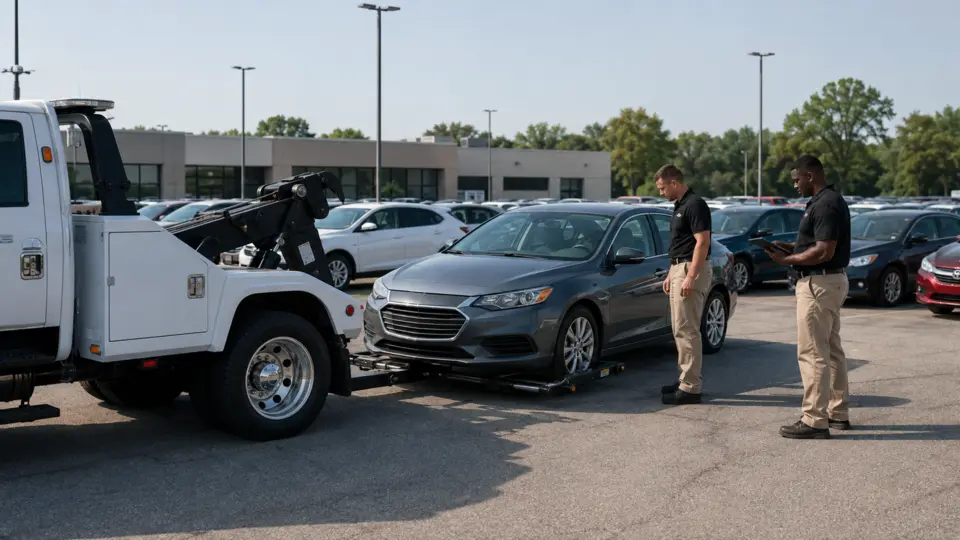
Assignment-specific experience
Floor-plan recovery organized around the lender’s authorized inventory.
LRS reviews each request around the inventory schedule, unit locations, access, condition, documentation, transport, storage, destination, reporting, and reconciliation expectations. Every portfolio requires an independent capability and acceptance review.
A floor-plan assignment is not simply a series of unrelated repossessions. The lender’s authorized inventory establishes the portfolio, while every accepted vehicle retains its own identity, condition record, key status, recovery status, exception history, and approved disposition.
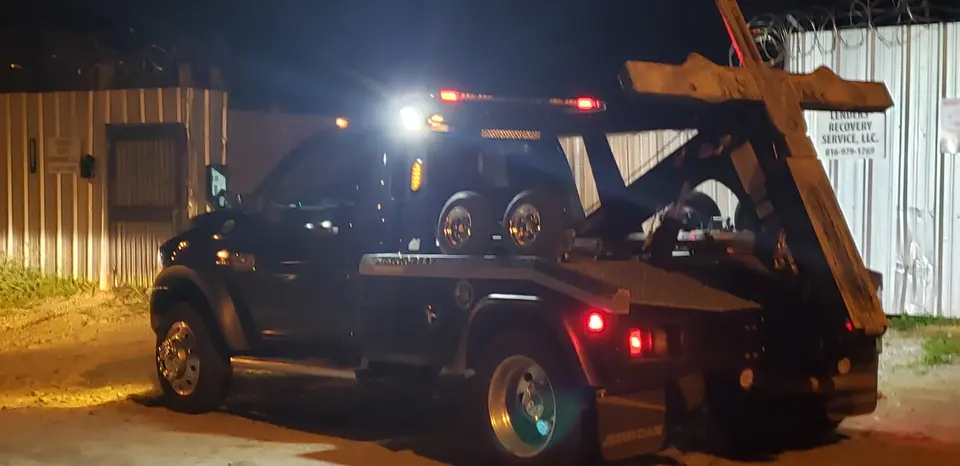
Operational readiness
Match the recovery method to the unit, location, and condition.
Dealer inventory can include passenger cars, pickups, vans, non-running units, damaged vehicles, blocked units, missing keys, and collateral at more than one location. Equipment, access, route, timing, secure storage, receiving hours, and destination all affect the accepted plan.
Public mention of this service does not guarantee capacity for every inventory size or deadline. LRS reviews lawful authority, dimensions, condition, access, equipment, storage, transport, destination, third-party availability, and current operating capacity before accepting work.
Prepare the portfolio
Information that shapes the recovery plan.
- Authorized lender, inventory schedule, and escalation contacts
- General unit count, asset classes, known locations, and priorities
- Keys, titles, visible condition, mobility, attachments, and contents concerns
- Site access, receiving restrictions, interruption rules, and exception reporting
- Approved destination, storage, transport, release, and reconciliation instructions
Assignment boundary: LRS reports observed unit status and supporting documentation within the accepted scope. LRS does not perform a financial audit, determine ownership, adjudicate sold-out-of-trust disputes, or provide legal advice.
Controlled portfolio workflow
From authorized inventory to reconciled disposition.
- 1
Confirm authority and inventory
Establish the authorized lender, accepted inventory schedule, business contacts, general unit count, asset classes, and secure data path.
- 2
Review units, locations, and access
Assess known locations, keys, condition, mobility, site access, receiving restrictions, and equipment requirements before field work.
- 3
Set priorities and exceptions
Define the recovery sequence, escalation contacts, reporting cadence, and approved treatment of absent, damaged, blocked, transferred, or unidentified units.
- 4
Recover and document units
Connect each accepted unit to photographs, visible-condition notes, key status, custody information, recovery status, and the approved next step.
- 5
Reconcile approved disposition
Report completed, pending, and exception units while following lender-approved storage, transport, release, auction, or other destination instructions.
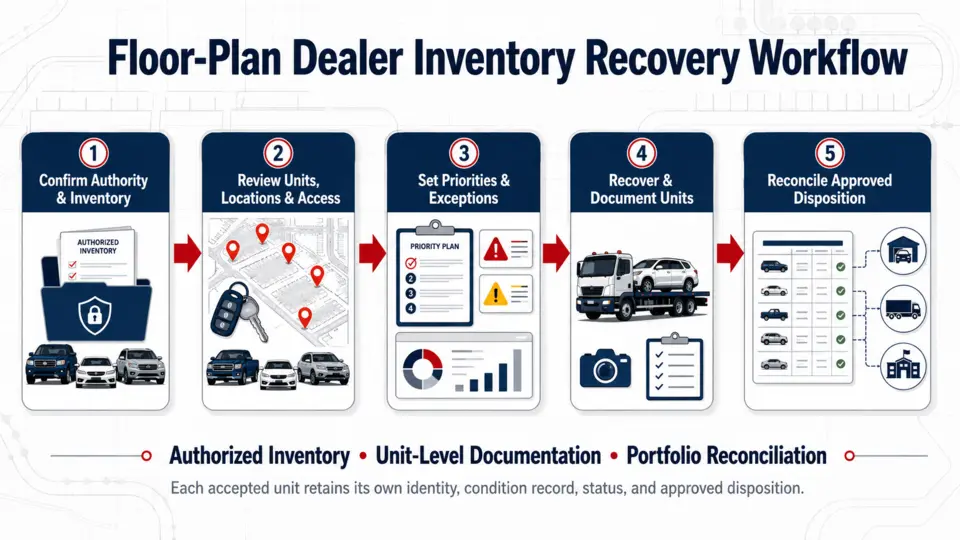
Floor-plan recovery workflow
Keep every accepted unit connected to the lender’s approved portfolio plan.
The workflow below summarizes authority review, inventory verification, priority setting, unit-level documentation, exception reporting, and approved disposition reconciliation.
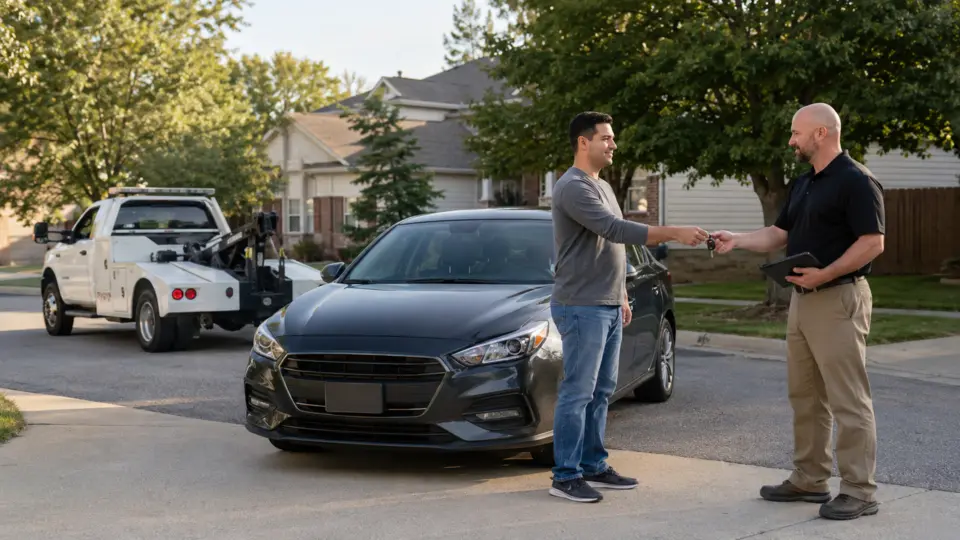
Authority, keys, and condition
Document the details that distinguish one inventory unit from another.
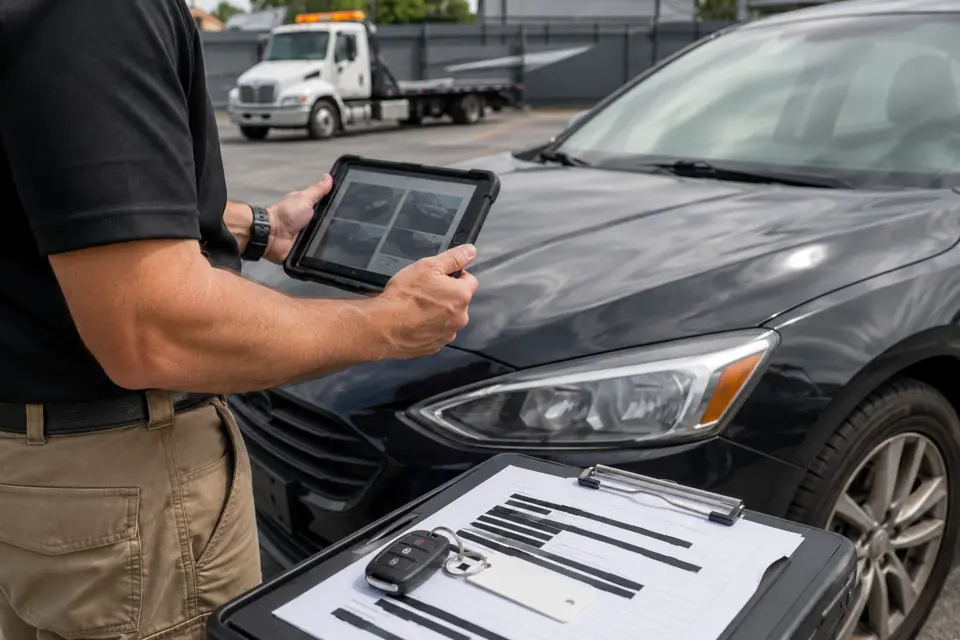
How floor-plan recovery differs from ordinary vehicle repossession
A floor-plan file may involve multiple units tied to an inventory schedule rather than one consumer account. Vehicle identity, location, custody, keys, condition, missing units, and approved disposition must be reconciled at the portfolio level.
Review before field activity
LRS begins with business contacts and a general scope review. VINs, account information, precise locations, access details, legal documents, and other protected unit data move only through the approved secure client channel after the lender relationship is established.
Exception reporting
The lender should define how present, absent, sold, transferred, dismantled, duplicate, damaged, blocked, unidentified, or non-running units are categorized and escalated. LRS documents what is observed within the accepted assignment scope and reports it through the approved channel.
Transport, storage, and destination
Transport and storage are not automatically included. Configuration, dimensions, condition, loading method, route, permits when applicable, storage duration, receiving hours, release instructions, and approved destination must be confirmed for the portfolio or individual unit.
This page describes an assignment-review path. It does not promise acceptance, timing, portfolio capacity, storage, transport, or recovery outcome for a particular file.
Floor-plan questions
What inventory lenders should confirm.
How is floor-plan recovery different from ordinary fleet recovery?
A floor-plan file begins with the lender’s authorized inventory schedule and requires portfolio-level reconciliation. Each unit still retains its own identity, condition record, status, and approved disposition.
Can LRS accept every unit at the same time?
No simultaneous completion or unlimited capacity is promised. Unit count, locations, conditions, access, transport, storage, destination, priorities, and current resources must be reviewed first.
How are missing or sold units handled?
The lender establishes the approved exception categories and escalation contact. LRS reports observed status and supporting documentation within the accepted scope; LRS does not make title, accounting, or legal determinations.
Are transport and storage included?
Not automatically. Equipment, route, authorization, permits when applicable, storage duration, destination, and any third-party involvement must be expressly reviewed and accepted.
What may be submitted through the public form?
Only business contact details, a general unit-count range, broad asset classes, a city or county, and the requested next step. Protected assignment and unit data belongs in the approved secure client channel.
Regional service-area paths
Review this service in priority Kansas City-region markets.
These city pages add county, corridor, access, local-evidence, and assignment-fit context. They do not guarantee acceptance, timing, or a recovery result. Use the full coverage directory for other Missouri and Kansas markets.
Need Kansas City recovery coverage?